
FSMA 204: What the New 2028 Deadline Means for Food and Beverage Manufacturers
Sep 22, 2026 | 2 min read
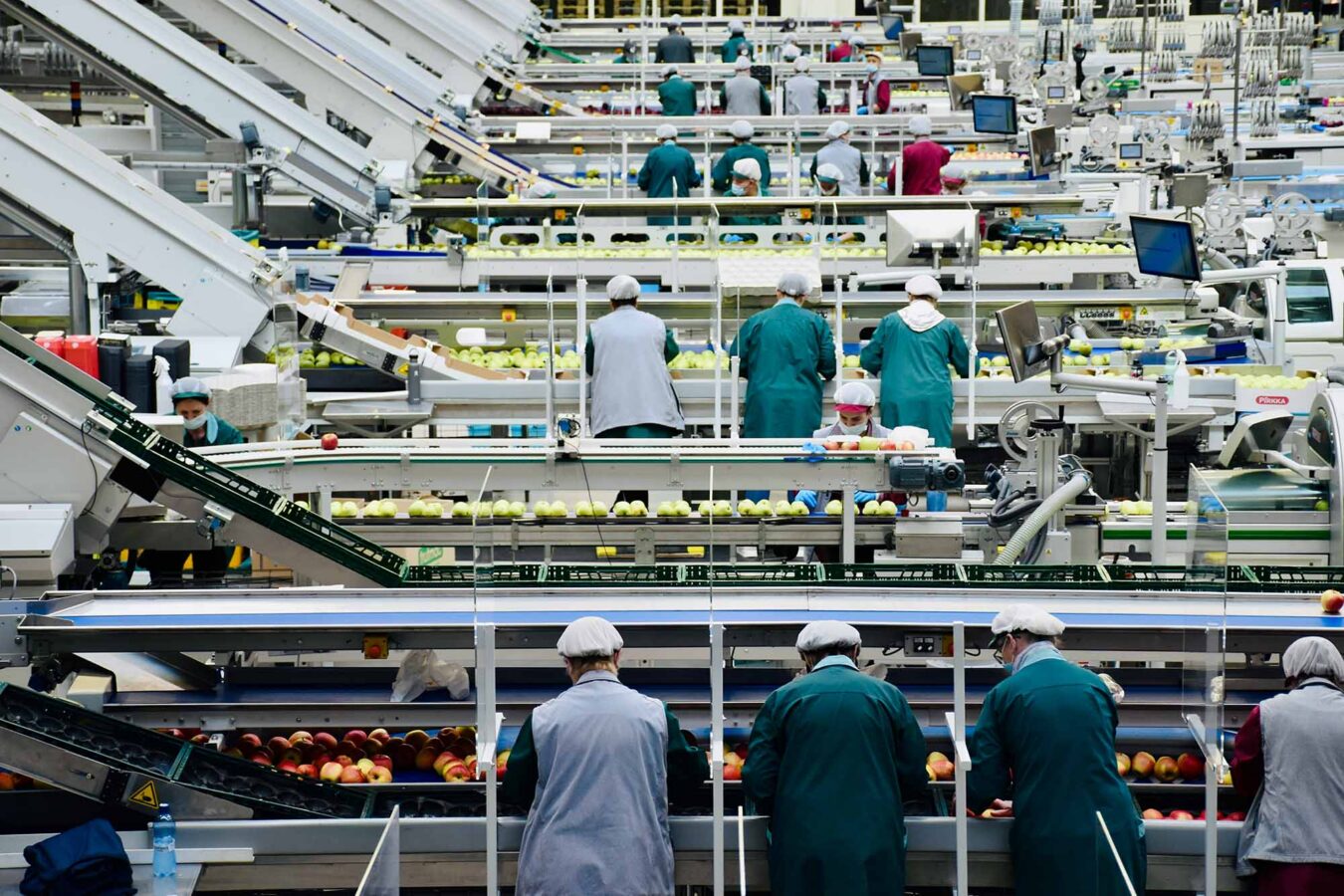
FSMA 204, the FDA’s Food Traceability Rule, was supposed to take effect on January 20, 2026. It didn’t. Congress restricted FDA funding for enforcing the rule before July 20, 2028 through the Continuing Appropriations Act of 2026, and the FDA has confirmed on its own site that the compliance date is now July 20, 2028, a 30-month extension from the original date.
That’s a real reprieve, and it’s easy to read it as permission to set the rule aside for another two years. FDA’s own testing of the rule says otherwise. In tabletop exercises the agency ran with industry participants earlier this year, only 40% of participants’ records properly captured the required lot code across every step of the supply chain the rule covers. The rule didn’t get easier. It got more time attached to it, and FDA’s data suggests most of the food industry needs that time.
This article covers what FSMA 204 actually requires, why FDA extended the deadline, what its own readiness testing found, and where manufacturers should start now instead of waiting for 2028.
Key Takeaways
- FSMA 204’s compliance date moved from January 20, 2026 to July 20, 2028, a 30-month extension driven by supply chain data interoperability problems, not by any change to what the rule requires.
- The rule applies to foods on FDA’s Food Traceability List (FTL): items including soft cheeses, shell eggs, leafy greens, tomatoes, cucumbers, melons, sprouts, fresh-cut produce, finfish, crustaceans, bivalve mollusks, and ready-to-eat deli salads, among others.
- Covered firms must track seven Critical Tracking Events (CTEs), from harvesting through shipping and receiving, and record specific Key Data Elements (KDEs) at each one, anchored by a traceability lot code.
- In FDA’s own 2026 tabletop readiness exercises, only 40% of participants correctly captured the lot code across every CTE, and just 27% captured complete lot code source information.
- FDA released a discussion paper in May 2026 proposing flexibilities on lot-level tracking, with industry feedback due by July 15, 2026, which means the exact recordkeeping requirements could still shift before 2028.
- FDA’s own recommendation is to build a traceability plan now and test it against real operations, rather than waiting for the compliance date to arrive.
Why the Deadline Moved
FSMA 204 was finalized as part of the Food Safety Modernization Act, aimed at speeding up recall response and outbreak investigation by giving FDA and industry a common, structured way to trace high-risk foods through the supply chain. The original compliance date gave industry three years from the final rule’s publication, and FDA’s own account of the extension says very few regulated entities expected to meet that January 2026 timeline.
The reasons FDA cited for the 30-month extension center on the supply chain, not any single company. Many data systems used across food supply chains aren’t interoperable with each other. Distributors reported struggling with the sheer volume of data they’d be required to manage and pass along. The technology built to handle that volume, at the time of the rule’s finalization, was still being piloted and evaluated rather than deployed at scale. FDA also made a structural point that matters for anyone tempted to wait: the rule only delivers its public health benefit if every entity in a supply chain complies, because a single non-compliant link breaks the chain of traceability data for everyone downstream. Extending the date gave the whole industry time to move together instead of penalizing early movers for partners who weren’t ready.
Congress reinforced that timeline directly. The FY2026 appropriations act, signed after the government shutdown ended in November 2025, restricts FDA from spending any funds to enforce FSMA 204 before July 20, 2028. The same legislation directs FDA to meet quarterly with regulated entities on compliance flexibilities and to deliver recommendations on lot-level tracking alternatives, which is the process now underway.
What FSMA 204 Actually Requires
The extension changed the timeline. It didn’t change the rule itself, which still has three core components any covered manufacturer needs to understand.
The Food Traceability List (FTL) identifies the specific foods the rule covers, based on a risk assessment of foods associated with past outbreaks and severe illness. The list includes soft and semi-soft cheeses, shell eggs, nut butters, leafy greens, tomatoes, cucumbers, melons, sprouts, tropical tree fruits, fresh herbs, fresh-cut fruits and vegetables, ready-to-eat deli salads, and seafood including finfish, crustaceans, and bivalve mollusks. A manufacturer handling any FTL food, or a product where an FTL food remains in its original form as an ingredient, falls under the rule.
Critical Tracking Events (CTEs) are the seven supply chain activities the rule requires firms to document: harvesting, cooling, initial packing, first land-based receiving for seafood, shipping, receiving, and transformation, which covers processing or repackaging that changes a food’s form.
Key Data Elements (KDEs) are the specific data points a firm must record and be able to share at each CTE. Every KDE traces back to a traceability lot code (TLC), a unique identifier assigned to a batch of food, and includes the product description, quantity and unit of measure, the parties involved in shipping and receiving, and the date and location of the event. FDA requires covered firms to be able to produce this information within 24 hours of a request, which is the operational core of the rule: a request during an active outbreak investigation, and a firm’s ability to answer it fast, with accurate data, from records that already exist.
What FDA’s Own Testing Found
FDA didn’t just extend the deadline and move on. It ran tabletop readiness exercises with industry participants in 2026 to see how prepared firms actually were, and the results explain a lot about why the extension happened.
The results, reported in Food Safety Magazine, showed only 40% of participants’ records properly captured the traceability lot code across every CTE, and just 27% captured complete lot code source information at each step. That’s despite over 80% of participants having some form of TLC present in their records and 73% having at least partial source data. The gap wasn’t about firms lacking any system. It was about systems that captured some of what’s needed, at some points in the chain, without capturing all of it consistently end to end.
The exercises also surfaced a finding that matters more than any specific technology choice: the firms that performed best weren’t the ones running the most advanced systems. They were the ones that had proactively coordinated with their supply chain partners on exactly what data to collect, in what format, and how to share it. Firms using traditional business records performed adequately when that coordination existed. Inconsistent buyer requirements, meanwhile, created real friction: when customers demand data collection that exceeds the rule’s own minimums, in their own preferred format, suppliers end up building a custom solution for every customer rather than one system that satisfies the regulation.
The Rule Could Still Change Before 2028
FDA opened a public comment period on a May 2026 discussion paper proposing several flexibilities to the lot-level tracking requirements, with feedback due by July 15, 2026. The proposals under discussion include allowing distributors to record a reasonable range of lot codes instead of exact codes for mixed-lot pallets, supporting systems that infer lot codes rather than scan every unit, addressing individual items sold without a printed lot code, and clarifying rules around returns, food waste donation, intracompany shipments, and food prepared in retail kitchens.
None of this is finalized, and manufacturers building a traceability system now should expect some adjustment to the exact recordkeeping mechanics before 2028 arrives. What isn’t likely to change is the underlying structure: an FTL, CTEs, KDEs, and a traceability lot code system running through the supply chain. Building toward that structure now, while staying flexible on the exact recordkeeping details still under discussion, is a more defensible position than waiting for a final answer that FDA itself says is still evolving.
Where to Start Before 2028
FDA’s own recommendation coming out of its readiness testing is to build a traceability plan and test it against real operations well before the compliance date, rather than waiting until enforcement is imminent. A few starting points make that manageable.
Confirm which of your products touch the FTL. This includes raw ingredients from the list used in a finished product, not just foods sold in their original form.
Map your CTEs against your current recordkeeping. For each harvesting, packing, shipping, receiving, or transformation event your operation performs, identify what data you already capture and where the gaps sit relative to the required KDEs.
Coordinate with supply chain partners before building a system. FDA’s testing found that firms who agreed with suppliers and customers on data format and sharing method outperformed firms with more advanced technology and no coordination. That conversation costs nothing and closes the gap that technology alone can’t.
Watch the 2026 rulemaking process. The flexibilities under discussion could change specific recordkeeping requirements before 2028, so a system built with some adaptability, rather than one hard-coded to the current draft language, will hold up better as the final mechanics settle.
Where DISHER Engineering Can Help
Building traceability into a production line touches process design, data capture at the point of packing or transformation, and integration with existing plant systems, which makes it a capital project as much as a compliance exercise.
At DISHER Engineering, we work with food and beverage manufacturers on capital project management, process design, and manufacturing engineering. Whether you’re mapping your first traceability plan or integrating lot-tracking data capture into an existing line, we can help you build toward FSMA 204 in a way that fits your operation now and holds up as the rule’s final details settle.
Written By:

DISHER
Communications Team
DISHER Newsletter
Sign up to receive articles and insights, delivered monthly.
Schedule a no-committment project call
Reach out to discuss your project to find out if DISHER could be a good fit for you.