
How to Modernize an Older Production Line Without a Full Rebuild
Oct 13, 2026 | 2 min read
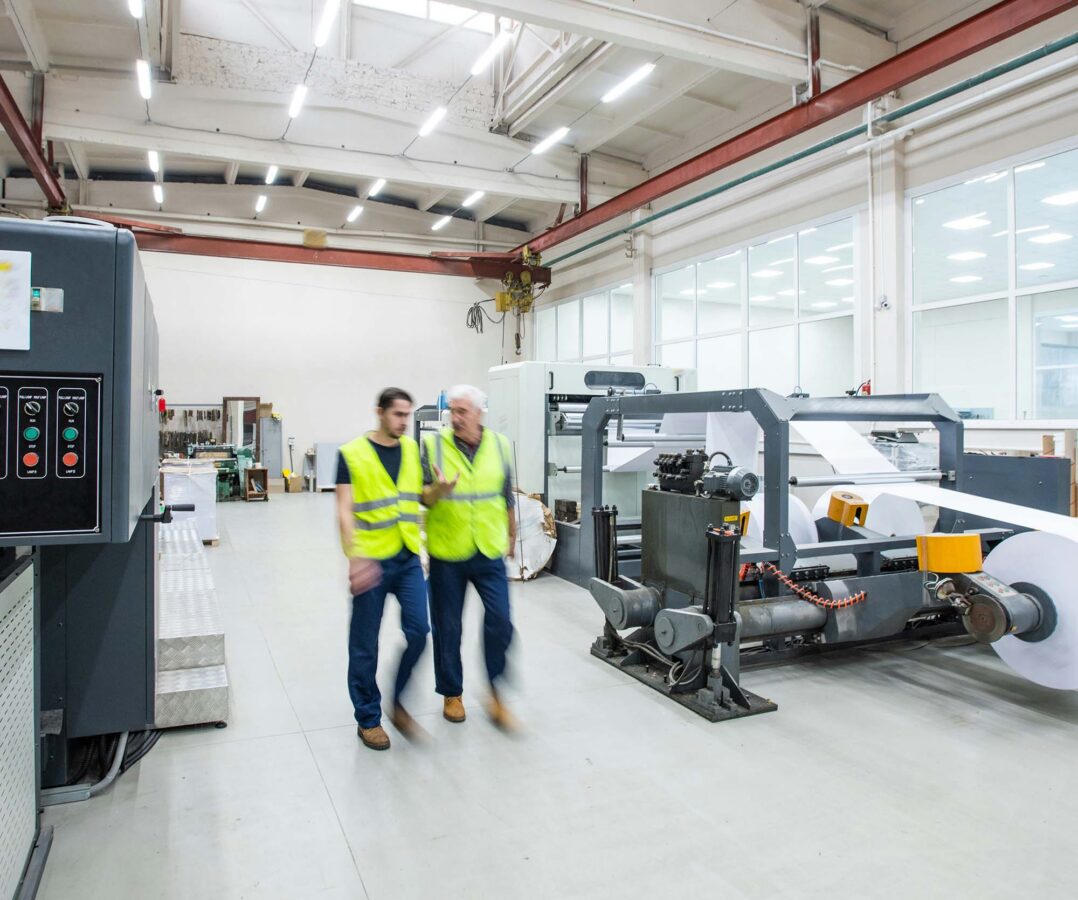
Capital planning season has a familiar shape. A line that has run for fifteen years is missing rate, maintenance is absorbing more hours than it used to, and somebody puts a replacement line on the capital list because that feels like the decisive answer.
The 2026 numbers argue for a more surgical approach. According to the ISM August 2026 Manufacturing PMI Report, the average commitment lead time for capital expenditures reached 171 days, roughly five and a half months before a machine is even ordered against a budget. Supplier deliveries have run slower for nine consecutive months. Meanwhile, food and beverage capital budgets are tightening: the twenty-five companies tracked in Food Processing’s annual capital spending outlook spent 8.8% less in 2025 than they had budgeted, $1.6 billion less than the prior year, and forecast only a 2.9% increase for 2026.
Those conditions favor targeted work on the equipment you already own. This article covers how to locate the real constraint on an older line, which retrofit approaches deliver, and how to build a phased plan that fits inside a budget that is not growing.
Key Takeaways
- The average commitment lead time for capital equipment reached 171 days in August 2026, according to ISM, which puts a full line replacement well past the next fiscal year for most plants.
- Legacy equipment is the single most-cited roadblock to smart factory progress, named by 47% of respondents in the Manufacturing Leadership Council’s 2026 survey, ahead of data interoperability at 37% and skilled labor at 36%.
- Siemens found that fast-moving consumer goods was the only sector where unplanned downtime hours increased, with per-plant annual downtime cost doubling since 2019 to just over $10 million.
- Average time to recover from a downtime event rose from 49 minutes to 81 minutes across the plants Siemens surveyed, which makes diagnostics and visibility a higher-value upgrade than raw capacity.
- Typical manufacturers run OEE near 55% to 60% against a world-class benchmark of 85%, so meaningful capacity often exists inside the current line rather than in a new one.
- ABB found that 17% of industrial decision-makers rarely or never factor lost productivity into capital decisions, which is how the wrong asset gets funded.
Start by Finding the Constraint, Not the Oldest Machine
Age is a poor proxy for impact. The oldest machine on a line is frequently not the one limiting throughput, and replacing it delivers a new asset attached to the same bottleneck.
Eliyahu Goldratt’s Theory of Constraints puts the principle bluntly: “Strengthening any link of a chain (apart from the weakest) is a waste of time and energy.” The five focusing steps that follow from it (identify the constraint, exploit it, subordinate everything else to it, elevate it, then prevent inertia from creating a new one) give a capital committee a defensible order of operations.
Getting the constraint right requires data most plants have not collected. ABB’s Modernization for Resilience study, built on responses from 3,600 senior decision-makers across 18 countries, found that 17% rarely or never include lost productivity impact in capital decisions, and that more than a third find communicating modernization ROI to senior leadership somewhat or very difficult. Among sites experiencing weekly interruptions, only 20% had a proactive modernization plan in place.
The practical move is to instrument before you specify. A month of accurate downtime data attributed to specific stations, with reasons attached, changes the conversation from “the line is old” to “station four accounts for 41% of our unplanned stops.” That second sentence funds a project.
The Headroom Already Sitting in the Line
Overall Equipment Effectiveness gives you a measure of how much of your existing asset you are actually using. The world-class benchmark of 85% traces to Seiichi Nakajima’s Introduction to TPM and breaks down into 90% availability, 95% performance, and 99% quality.
Measured reality sits well below that. Evocon, analyzing more than 3,500 machines across 50-plus countries between May 2023 and June 2024, found most manufacturing organizations score between 55% and 60%, with roughly 6% reporting 85% or above and the authors estimating the true figure is closer to 3% once calculation errors are corrected.
A line running at 58% OEE has substantial unused capacity inside its existing footprint. Recovering ten points of OEE on an installed line is a fundamentally different project, in cost and in lead time, than buying capacity you already own.
What Modernization Looks Like on an Older Line
Digital retrofitting has a working definition in the peer-reviewed literature. A systematic review published in Manufacturing Review describes it as “the upgrading of legacy machines and their integration into an IoT network to facilitate the acquisition and transmission data,” and classifies published solutions into distinct architectures.
IoT hardware gateways accounted for 62.5% of the solutions reviewed, making them the most common approach. A gateway device sits alongside the existing machine and handles the protocol translation that legacy controllers cannot. This works on equipment whose controller has no spare capacity and no path to a firmware update.
Embedded streaming gateways made up 25%, adding IoT connectivity through a PLC firmware or software update with no new hardware. The review flags the risk clearly: a controller without processing headroom is a poor candidate.
Starter kits accounted for the remaining 12.5%, packaged sensor-and-gateway bundles aimed at getting data off a machine quickly.
Writing in Automation World, James Koelsch describes the practical versions of this on plant floors: vibration, temperature, and current sensors added to machines that never had them; gateways that read from the existing controller and transmit over MQTT or REST; and connecting an existing PLC to an OPC server rather than replacing the controller outright.
His food and beverage example is worth sitting with. Sugar Creek Brewing was losing roughly $30,000 a month to foaming problems on its bottling line. Adding fill-level and temperature sensors to the existing line saved the company $120,000 in 2019. No line replacement, no new filler.
McKinsey’s assessment of digital manufacturing upgrades puts the achievable range at 30% to 50% reductions in machine downtime, 10% to 30% increases in throughput, and 15% to 30% improvements in labor productivity. The same analysis notes that most companies remain stuck in pilot phase without capturing that value, which points at execution rather than technology as the limiting factor.
Why Visibility Beats Capacity Right Now
One number from Siemens’ True Cost of Downtime report deserves more attention than it gets. Across the plants surveyed, average recovery time after a downtime event rose from 49 minutes to 81 minutes over five years. Plants are going down less often and staying down longer.
That trend rewards diagnostics. A machine that tells a technician what failed cuts the diagnosis half of that 81 minutes, and it does so for a fraction of the cost of the machine itself.
The sector context sharpens the case for food and beverage operations. Siemens reports the cost of a lost hour in fast-moving consumer goods at $36,000, with per-plant annual downtime cost doubling since 2019 to just over $10 million. FMCG was the only sector in the study where downtime hours increased while automotive and heavy industry roughly halved theirs. Siemens attributes the gap to a sector that “needs to catch up on Industry 4.0 technology,” where predictive maintenance has been a lower business priority because the hourly cost is less dramatic than in heavy industry.
Less dramatic per hour, and accumulating faster than anywhere else.
Building the Phased Plan
A modernization program that survives a capital committee tends to share a few characteristics.
It sequences around scheduled downtime you already have. Planned maintenance windows, seasonal slowdowns, and changeover periods are installation slots that cost nothing in lost production. Mapping the work to that calendar removes the largest hidden cost from the business case.
It funds instrumentation first and iron second. Sensors and gateways install fast, cost little relative to equipment, and produce the data that justifies the next phase. That sequence also means the second phase gets specified against evidence rather than assumption.
It accounts for who does the installation. JLL projects that roughly 2.1 million skilled trades positions could go unfilled by 2030 across electricians, HVAC technicians, pipefitters, and related trades. Installation labor is now a scheduling constraint in its own right, and it belongs in the plan rather than in the assumptions.
It leaves room for the equipment market to move. Beyond the 171-day commitment lead time, a Section 232 national security investigation covering CNC machining centers, industrial stamping and pressing machines, and related metalworking equipment was initiated in September 2025 and has not concluded. That is an open question sitting underneath any large equipment order.
Food and beverage engineers are already reaching this conclusion in the field. In FOOD ENGINEERING’s 49th Annual Plant Construction Survey, Jeremy Klysen of Burns & McDonnell observed that “the increasingly competitive siting environment is leading owners to more closely assess whether greenfield development is justified or if expanding an existing facility offers a more practical and strategic path forward.” Ronald Rens of Gleeson added that “many owners are choosing to renovate or expand existing facilities because these locations already have established workforces and utility capacity in place.”
Where DISHER Engineering Can Help
Modernizing a line in place is harder engineering than replacing it. The work has to fit the building, the utilities, and the production schedule that already exist, and it has to integrate with controls that were specified a decade or more ago.
At DISHER Engineering, we work with food and beverage and industrial manufacturers on manufacturing engineering, controls and automation, and capital project management. Our article on the signs a food processing line needs an engineering refresh covers the diagnostic side of this question, and our overview of the benefits and types of manufacturing automation walks through what the upgrade options actually deliver.
Written By:

DISHER
Communications Team
DISHER Newsletter
Sign up to receive articles and insights, delivered monthly.
Schedule a no-committment project call
Reach out to discuss your project to find out if DISHER could be a good fit for you.