
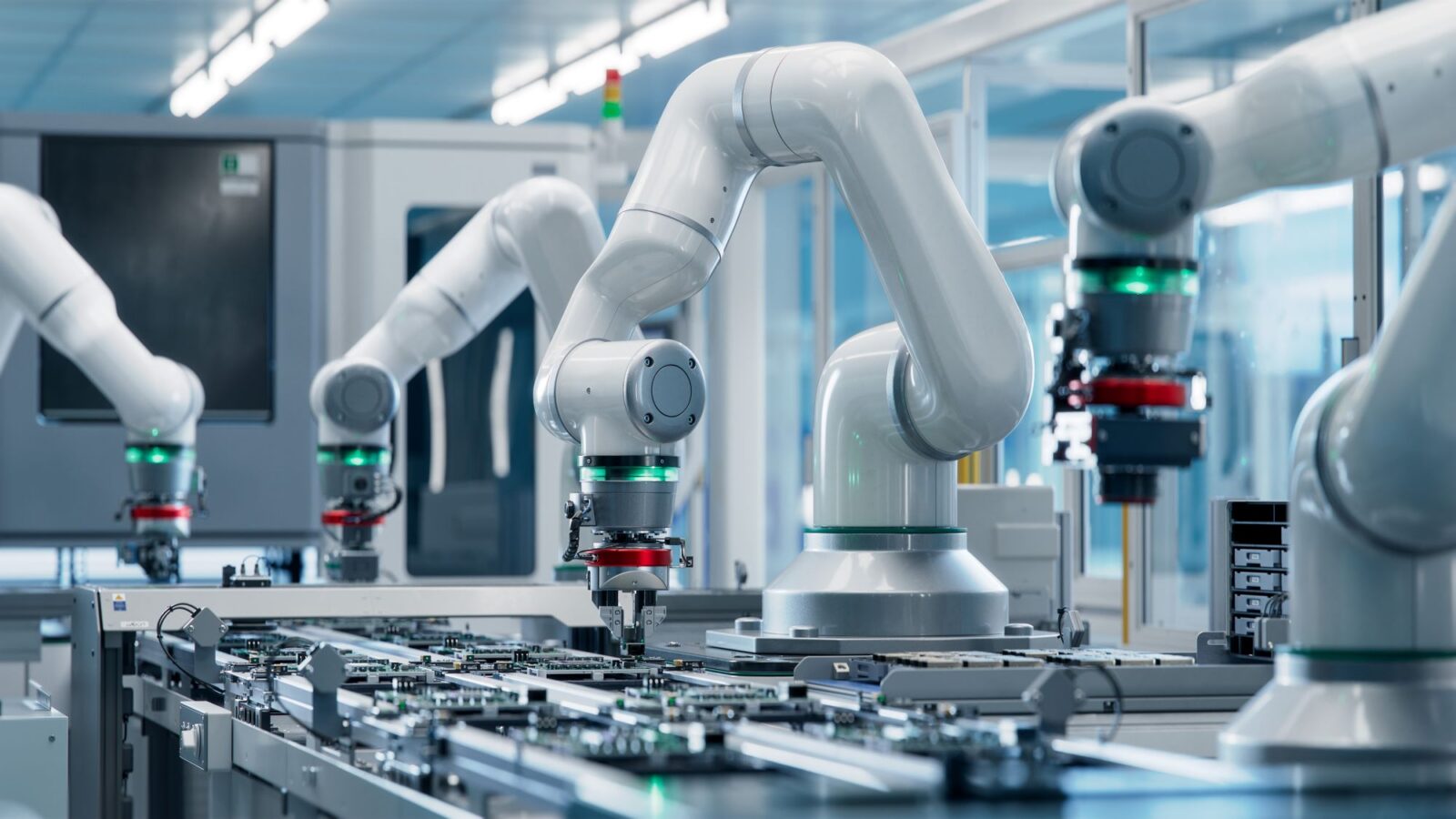
Automation is one of the most powerful tools available to manufacturers today, so much so that if you’re not at least thinking about where to automate, you’re probably falling behind. Automation reduces waste, speeds up production, and takes repetitive, physically demanding work off the plates of your people. But the part that doesn’t get talked about enough is that automation isn’t the right answer for everything.
In our experience working with manufacturers across industries — from medical device to food and beverage to automotive — some of the costliest mistakes we’ve seen happen when companies automate the wrong things. They invest heavily in a system, only to discover the improvements they were looking to address persist.
This article isn’t meant to slow down your automation journey, but I would like to help you ensure the decisions you make today don’t become headaches you’re untangling years from now.
Key Takeaways
- Automation works best in high-volume, highly repeatable, well-defined processes.
- Tasks requiring human judgment, nuanced sensory evaluation, or adaptive decision-making are often poor automation candidates.
- The cost of automating the wrong thing — in rework, downtime, and lost quality — can far exceed the cost of keeping it manual.
First, an Automation Reality Check
here’s a ton of pressure right now to automate. Labor costs are rising, lead times are under scrutiny, and technology has never been more accessible. Things like cobots and vision systems used to require a massive capital investment but can now be piloted on a more reasonable budget.
But accessible doesn’t always mean appropriate. And the question of whether you can automate something is very different than if you should.
What Tasks Shouldn’t Be Automated?
1. Complex Quality Inspection That Relies on Judgement
Automated vision systems are impressive. They can catch dimensional defects, surface irregularities, and color variations at speeds no human inspector can match. But they work best when “good” and “bad” can be precisely defined and the defect profile is consistent.
The challenge is in the gray areas because inspectors with years of experience develop something harder to program: contextual judgement. They know that a hairline scratch on a cosmetic surface is a reject, but the same marking in a non-critical zone on the same part might be perfectly acceptable. They know when something looks off even if it doesn’t trigger a spec violation.
That kind of nuanced evaluation is hard to replicate in technology. In highly regulated industries like medical devices, where inspectors are trained and certified, that human expertise is often a regulatory and quality requirement.
2. Early-stage R&D and Prototyping
Automation thrives on repetition and predictability. Product development in its early stages is essentially the opposite of that. When your team is iterating a prototype, the value is in the flexibility to change quickly and the ability to capture qualitative feedback that isn’t easy to quantify. Engineers need to touch the part, observe failure modes, and make judgment calls that inform the next iteration.
Introducing automation into this phase can actually slow things down rather than speed them up. You spend time programming and configuring a system for a process that’s going to change tomorrow.
3. Handling Product or Process Exceptions
Every production line has exceptions. Maybe it’s an odd lot that arrives out of spec, a material that behaves differently than expected, or an order with a non-standard configuration.
Automated systems are designed around the norm, so when an automated system encounters something it wasn’t programmed for, it typically does one of two things: it fails or proceeds incorrectly. Neither is a good outcome. Humans can recognize an unusual situation, assess its severity, and decide on an appropriate response.
4. Maintenance, Troubleshooting, and Skilled Trades Work
There’s a lot of enthusiasm right now around predictive maintenance, and rightfully so. Sensors that flag equipment issues before they become failures are valuable.
However, there’s a meaningful difference between using technology to inform your maintenance team and assuming technology can fully replace them. When something breaks down unexpectedly, or a machine starts behaving in an unusual way, you need skilled technicians. People who understand the equipment, can physically inspect and interact with it, and draw on years of experience diagnosing problems that don’t show up cleanly in a dashboard.
Maintenance automation tools are at their best when they make your skilled trades team more effective, not when they’re positioned as a substitute.
The Cost of Automating the Wrong Thing
There’s a temptation to view automation ROI calculations with this framework: you compare the cost of the labor to the cost of the system, and if the math works out, you move forward. That framework misses a lot.
When you automate a process that wasn’t ready for it, the costs tend to show up in places that aren’t on the original spreadsheet. Rework and scrap rates increase because the system can’t handle variability. Downtime increases as the automated solution requires frequent intervention. Quality mistakes make it to the customer because automated inspection missed what a trained eye would have caught. And your team spends a ton of time managing a system that was supposed to reduce their workload.
In highly regulated industries, the stakes are even higher. A quality mistake in medical device manufacturing or a process deviation in food and beverage can trigger regulatory action, recalls, or customer audits. The cost of getting automation wrong in those environments goes beyond operational damage and becomes reputational damage.
We’ve worked with clients who came to us after an automation implementation that hadn’t gone as planned. In many cases, the issue wasn’t the technology itself. It was that the process wasn’t well-defined enough, the variability wasn’t fully understood, or the human judgment component was underestimated.
How to Think About Automation More Strategically
The goal isn’t to automate everything, but to automate the right things, at the right time, with the right level of investment. A few principles that guide our thinking are:
- Start with the process, not the technology. Before evaluating any automation solution, make sure the process itself is well-documented, stable, and optimized. Automating a broken or inconsistent process just makes that problem faster and harder to fix.
- Map variability honestly. High variability isn’t an automatic disqualifier for automation, but it has to be understood and accounted for in the system design. If you’re not sure how variable the process is, find out before you commit.
- Identify where human judgment adds unique value. If a task requires contextual decision-making, sensory evaluation, or adaptive response to unpredictable inputs, document that. It’s not a weakness in your process but a signal that human capability is doing real work.
- Pilot before you scale. Test your assumptions on a smaller scale before committing to a full implementation. What looks clean on paper often looks different when it’s running in a production environment.
- Design for human-machine collaboration, not replacement. The strongest automation strategies are ones where technology handles what it does best (speed, repeatability, data capture) and humans handle what they do best (judgment, communication, adaptability).
Solidify Your Automation Strategy
Automation is a powerful lever for manufacturers who use it well. But “using it well” means being selective. Getting the distinction right is one of the most important things you can do for your production floor, your quality system, and your team.
Ready to take a closer look at your automation strategy? Connect with us here.
Written By:

Devin Brown
Automation Engineer
DISHER Newsletter
Sign up to receive articles and insights, delivered monthly.
Schedule a no-committment project call
Reach out to discuss your project to find out if DISHER could be a good fit for you.